
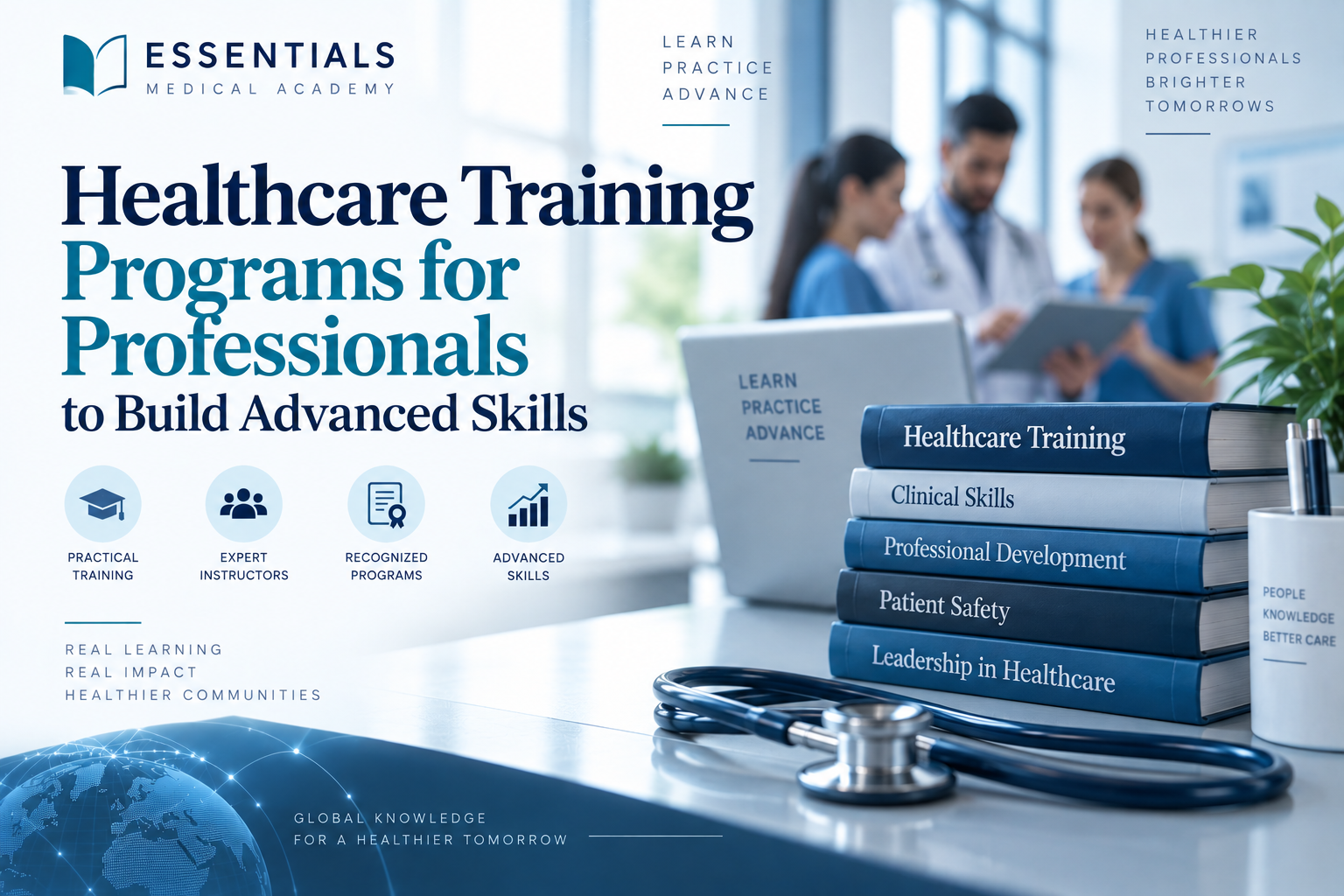
Healthcare Training refers to structured educational activities designed to develop and improve the knowledge, practical abilities, clinical understanding, and professional competencies of individuals working or preparing to work within the healthcare sector. It may be delivered through academic institutions, specialized training academies, hospitals, clinics, professional organizations, or online learning platforms. Depending on the learner’s profession and career objectives, training can range from fundamental healthcare principles to highly specialized clinical, technical, administrative, or managerial subjects. The primary purpose is to help healthcare professionals maintain appropriate competencies and apply their knowledge responsibly within their defined professional roles.
Training programs can be designed for a wide variety of healthcare professionals, including doctors, nurses, pharmacists, dentists, laboratory specialists, radiology professionals, physiotherapists, healthcare technicians, administrators, and other allied health practitioners. Each group may require different educational content based on its responsibilities. For example, clinical professionals may focus on patient assessment, treatment approaches, emergency care, or infection prevention, while healthcare technicians may receive training related to diagnostic equipment, laboratory procedures, patient monitoring, or technical safety. Administrative professionals may instead study healthcare management, quality improvement, healthcare information systems, or organizational leadership.
A comprehensive program generally combines theoretical education with practical application. Theoretical lessons provide learners with essential concepts, terminology, guidelines, and scientific principles, while practical activities allow them to understand how those concepts may be applied in realistic professional situations. Depending on the subject, practical learning may include simulations, case studies, demonstrations, workshops, supervised activities, clinical scenarios, or problem-solving exercises. This combination can help learners develop greater confidence while encouraging careful decision-making and adherence to appropriate professional standards.
Another important characteristic is flexibility. Healthcare professionals have different levels of experience, schedules, and career objectives, so educational providers may offer introductory, intermediate, and advanced programs. Some courses can be completed through classroom-based instruction, while others may use online learning, blended education, workshops, or intensive short-term sessions. The appropriate format depends on the learner’s professional requirements and the complexity of the subject.
Healthcare education should also be viewed as an ongoing professional development process rather than a one-time activity. Medical knowledge, technologies, clinical guidelines, healthcare regulations, and patient-care practices continue to evolve. Regular learning allows professionals to review established knowledge, understand emerging developments, and identify areas where additional education may be beneficial. By selecting programs that match their qualifications and professional responsibilities, healthcare workers can continue developing relevant competencies and contribute more effectively to safe, coordinated, and patient-centered healthcare.
Why Healthcare Training Is Important for Healthcare Professionals
Healthcare Training is important because healthcare professionals work in an environment where knowledge, technology, clinical practices, and patient needs are constantly evolving. Doctors, nurses, pharmacists, technicians, therapists, administrators, and other healthcare workers must maintain appropriate knowledge and professional competencies throughout their careers. Initial academic qualifications provide an important foundation, but continuing education can help professionals remain familiar with developments relevant to their responsibilities. Regular learning also provides opportunities to review established procedures, strengthen practical abilities, and address areas where additional knowledge may improve professional performance.
One of the major benefits is supporting patient safety. Healthcare professionals frequently make decisions or perform procedures that can directly influence patient care. Education focused on infection prevention, medication safety, emergency response, clinical communication, documentation, equipment use, and quality standards can help professionals understand appropriate practices and recognize potential risks. Training does not eliminate the possibility of errors, but well-structured educational programs can reinforce safe working principles and encourage professionals to follow established protocols and use appropriate clinical judgment within their scope of practice.
Professional education can also contribute to improved clinical competence. Healthcare knowledge develops as researchers introduce new evidence, technologies, diagnostic methods, medications, treatment approaches, and healthcare systems. Professionals who continue learning are better positioned to understand relevant developments and determine how they relate to their roles. Depending on the specialty, additional education may help professionals strengthen skills in areas such as patient assessment, clinical documentation, diagnostic procedures, rehabilitation, emergency care, infection control, or healthcare management.
Another important advantage is improved communication and teamwork. Modern healthcare is increasingly multidisciplinary, requiring professionals from different specialties to coordinate their efforts. Educational programs can address communication techniques, professional collaboration, patient education, conflict management, and teamwork. These skills can help healthcare workers communicate information more clearly, understand the responsibilities of other team members, and contribute to more coordinated patient care. Effective communication is particularly important when patients move between departments or when multiple professionals participate in the same care process.
Continuing professional development may also support career growth. Healthcare professionals may pursue specialized education when preparing for new responsibilities, exploring a different area of practice, or developing leadership and management capabilities. However, the value of a training program depends on its quality, relevance, and recognition, and completing a course does not automatically grant a professional license or authorization to perform activities outside an individual’s regulated scope of practice. Professionals should therefore consider the curriculum, faculty qualifications, practical components, assessment methods, and recognition of the educational provider before enrolling. When selected carefully, ongoing education can strengthen professional knowledge, support safer practices, encourage lifelong learning, and help healthcare professionals respond effectively to the changing demands of modern healthcare.
Who Can Benefit from Healthcare Training Programs?
Healthcare Training can benefit a wide range of individuals working in or preparing to enter the healthcare sector. As healthcare continues to develop through advances in medical knowledge, technology, diagnostic methods, and patient-care practices, professionals need opportunities to maintain and expand their competencies. Educational programs can be suitable for experienced practitioners seeking to update their knowledge, recent graduates preparing for employment, healthcare workers developing specialized skills, and professionals moving toward administrative or leadership responsibilities. The appropriate program depends on the learner’s qualifications, professional role, career objectives, and applicable regulatory requirements.
Doctors and Physicians: Medical professionals may benefit from educational programs that allow them to review current clinical concepts, explore specialized subjects, and strengthen competencies relevant to their area of practice. Depending on their specialty, physicians may pursue learning related to emergency medicine, critical care, pain management, infection control, diagnostic techniques, patient safety, or other areas of professional interest. Continuing education can also provide opportunities to examine new evidence and developments while maintaining a commitment to responsible clinical practice.
Nurses and Nursing Professionals: Nurses work closely with patients and multidisciplinary healthcare teams, making continuous professional development particularly valuable. Educational programs may focus on patient assessment, infection prevention, emergency response, medication safety, clinical communication, documentation, or specialized nursing practices. Such learning can help nurses reinforce existing knowledge and prepare for responsibilities that correspond with their qualifications and professional scope.
Pharmacists and Allied Health Professionals: Pharmacists, laboratory specialists, radiology professionals, physiotherapists, respiratory therapists, nutrition professionals, and healthcare technicians may also benefit from specialized education. Programs can address subjects related to medication management, diagnostic procedures, rehabilitation, patient safety, medical technology, or quality improvement. By selecting content relevant to their discipline, professionals can strengthen knowledge that supports their day-to-day responsibilities.
Healthcare Administrators and Managers: Professionals responsible for healthcare operations can pursue programs covering hospital administration, healthcare quality, leadership, strategic planning, human resources, healthcare information systems, and organizational improvement. These subjects can help administrators better understand the relationship between operational decisions, staff performance, patient services, and organizational objectives.
Recent Healthcare Graduates: Newly qualified graduates may use professional education to strengthen their transition from academic study to workplace responsibilities. Programs can introduce practical scenarios, professional communication, healthcare standards, and specialized subjects that complement their formal education.
At Essentials Medical Academy, educational opportunities can be considered by healthcare professionals according to their individual learning needs and career goals. Learners should evaluate each program’s curriculum, faculty, practical components, assessment methods, and recognition before enrollment. Additional education should complement the individual’s formal qualifications and should not be understood as automatically providing a license or authorization to perform activities outside the applicable professional scope. With appropriate program selection, healthcare workers can continue developing their knowledge, professional confidence, and readiness for the evolving demands of modern healthcare.
Types of Healthcare Training Programs for Professionals
Healthcare Training programs are available in different formats and subject areas to meet the diverse educational needs of professionals working across the healthcare sector. Since healthcare includes numerous disciplines, each profession requires specific knowledge, practical competencies, and professional standards. A suitable program can help learners strengthen their existing capabilities, update their knowledge, and develop skills that are relevant to their current responsibilities or future career objectives. The type of program selected should depend on the learner’s professional background, level of experience, specialization, and the requirements that apply to their profession and country.
One major category includes clinical education programs, which focus on knowledge and skills directly related to patient care. These programs may cover clinical assessment, emergency medicine, infection prevention, patient safety, diagnostic procedures, medication management, critical care, and other healthcare subjects. Clinical education can be useful for professionals who want to reinforce their understanding of patient-centered practices and become more familiar with current approaches within their field. Depending on the subject, learning may include case studies, simulations, demonstrations, workshops, or other practical activities.
Another category is professional development programs, which focuses on broader competencies required for effective healthcare practice. These may include communication, leadership, teamwork, quality improvement, healthcare management, professional ethics, documentation, and organizational skills. Such subjects are relevant not only to clinical practitioners but also to administrators, supervisors, technicians, and other healthcare employees. Developing these capabilities can support collaboration between departments and contribute to more organized healthcare services.
Specialized programs provide another pathway for professionals seeking focused knowledge in a particular discipline. Examples may include oncology, infection control, pain management, diabetes care, rehabilitation, medical laboratory practice, diagnostic imaging, healthcare technology, or other specialized areas. These programs allow learners to select education that closely matches their professional interests and responsibilities.
Programs may also differ in their delivery methods. Some are offered through classroom instruction, while others use online learning, blended education, workshops, or intensive courses. The appropriate format depends on the complexity of the subject, the learner’s schedule, and the practical requirements of the program. Professionals should review the curriculum, learning objectives, faculty qualifications, assessment methods, duration, and recognition of the provider before enrolling. A well-structured educational pathway should provide meaningful knowledge and competencies rather than focusing only on receiving a certificate. By selecting programs that align with their professional needs, healthcare workers can support continuous development and remain prepared for the evolving requirements of modern healthcare.
Clinical Healthcare Training Programs
Clinical Healthcare Training programs are designed to support healthcare professionals in developing knowledge and practical competencies related to patient care, clinical procedures, assessment, safety, and evidence-based practice. These programs may be suitable for physicians, nurses, pharmacists, allied health professionals, technicians, and other qualified healthcare workers, depending on the subject and admission requirements. Clinical education can complement formal academic qualifications by providing focused learning in areas that professionals may encounter during their daily responsibilities. The exact scope of each program should correspond to the learner’s professional qualifications and authorized scope of practice.
Clinical programs can cover a broad range of subjects. Common examples include emergency medicine, critical care, infection prevention and control, patient assessment, clinical documentation, medication safety, diagnostic procedures, pain management, rehabilitation, and chronic disease management. Specialized courses may also address particular patient populations or clinical environments. The objective is generally to provide organized educational content that enables learners to review important principles, understand appropriate procedures, and develop greater familiarity with clinical situations relevant to their profession.
Practical application is an important component of effective clinical education. Healthcare professionals often need to translate scientific and theoretical knowledge into appropriate actions while considering patient safety and established clinical protocols. Depending on the program, practical learning may involve simulations, case-based discussions, clinical scenarios, demonstrations, workshops, or supervised activities. These approaches can help learners analyze situations, identify relevant information, communicate effectively, and make decisions within their professional responsibilities.
Clinical education can also support multidisciplinary collaboration. Modern healthcare frequently involves several professionals participating in the care of the same patient. Physicians, nurses, pharmacists, laboratory specialists, radiology professionals, therapists, and technicians must often communicate information and coordinate their activities. Educational programs that emphasize teamwork, professional communication, and patient-centered care can help participants understand how their responsibilities connect with those of other healthcare team members.
When selecting a clinical program, professionals should examine the curriculum and determine whether the content is appropriate for their current level of experience. They should also review the qualifications of instructors, practical components, assessment methods, learning format, duration, and recognition of the educational provider. It is important to distinguish educational achievement from professional licensing, as completing a course does not necessarily authorize an individual to perform procedures or provide services outside the requirements of their profession. A carefully selected clinical program can nevertheless provide valuable continuing education, helping professionals update their knowledge, strengthen relevant competencies, and remain better prepared to contribute to safe and effective patient care.
Professional Healthcare Training Programs
Professional Healthcare Training programs focus on the broader knowledge and competencies that healthcare professionals need to perform effectively within modern healthcare organizations. While clinical expertise is essential for many healthcare roles, successful professional practice also depends on communication, teamwork, leadership, organization, ethical decision-making, quality improvement, and effective management of responsibilities. Educational programs in these areas can benefit clinicians, technicians, administrators, supervisors, and other healthcare workers who want to strengthen professional capabilities alongside their technical or clinical knowledge.
Communication is one of the most important areas addressed by professional development programs. Healthcare workers communicate with patients, families, colleagues, supervisors, and professionals from different disciplines. Clear communication can support accurate information exchange, improve teamwork, and help patients better understand relevant instructions or healthcare processes. Programs may explore professional communication techniques, patient interaction, conflict management, active listening, and strategies for communicating effectively within multidisciplinary teams.
Leadership and management are also important components of professional development. Healthcare organizations depend on professionals who can coordinate teams, organize resources, identify operational challenges, and support improvements in workplace performance. Programs may introduce concepts related to leadership styles, team management, strategic planning, decision-making, performance evaluation, and organizational development. These subjects can be particularly relevant to professionals preparing for supervisory or managerial responsibilities.
Quality and patient safety represent another significant area. Healthcare organizations continually work to improve processes, reduce preventable risks, and maintain appropriate standards of care. Professional education can introduce learners to quality improvement methods, risk management, incident reporting, infection prevention principles, documentation standards, and patient-safety frameworks. Understanding these concepts can help professionals recognize how individual responsibilities contribute to broader organizational goals.
Professional development can also support career planning. Experienced professionals may pursue additional education when preparing for leadership positions, changing their area of responsibility, or strengthening specific workplace competencies. Recent graduates may benefit from programs that help them understand professional expectations and develop skills that complement their academic background. However, educational programs should always be selected according to the learner’s qualifications and professional requirements.
Before enrollment, professionals should review the learning objectives, curriculum, instructor qualifications, delivery method, assessment process, duration, and recognition of the provider. They should also consider whether the subject is directly relevant to their current role or future career plans. The purpose of professional education is not simply to collect certificates but to develop knowledge that can be applied appropriately in the workplace. With relevant and well-structured education, healthcare professionals can strengthen communication, leadership, teamwork, quality-awareness, and organizational skills while contributing to more coordinated and effective healthcare services.
Specialized Healthcare Training Programs
Specialized Healthcare Training programs provide professionals with focused educational opportunities in particular clinical, technical, or administrative areas of healthcare. As medical knowledge and healthcare technology continue to expand, professionals may choose to develop deeper knowledge in subjects that are directly connected to their responsibilities or career interests. Specialized education can complement a professional’s existing qualifications by concentrating on a defined area rather than covering the broad range of subjects included in general healthcare education.
The subjects available through specialized programs can vary considerably. Clinical professionals may explore areas such as emergency medicine, critical care, pain management, infection prevention, diabetes care, oncology, cardiovascular healthcare, rehabilitation, or other specialties. Technical professionals may study diagnostic imaging, laboratory procedures, medical equipment, healthcare technology, or quality-control processes. Healthcare administrators may pursue focused education in hospital management, healthcare quality, healthcare information systems, strategic planning, or risk management. The appropriate subject depends on the learner’s professional background and intended career direction.
A major advantage of specialized education is its focused curriculum. Instead of introducing general concepts across multiple healthcare disciplines, a specialized program can dedicate greater attention to a specific subject and its practical applications. Learning may include current concepts, professional guidelines, case studies, clinical scenarios, problem-solving exercises, workshops, and assessments. These methods can help participants connect theoretical information with situations relevant to their professional environment.
Specialized education can also support professionals who are developing a particular career pathway. A healthcare worker who has already established a foundation in their profession may identify an area in which additional knowledge would be useful. Focused education can provide an organized way to explore that subject and determine whether further academic or professional development would be appropriate. For recent graduates, specialized programs may also offer exposure to areas they are considering for future development, provided that the program is suitable for their educational level.
Professionals should carefully evaluate specialized programs before making an enrollment decision. Important factors include the relevance of the curriculum, qualifications and experience of instructors, practical learning opportunities, assessment methods, course duration, delivery format, and recognition of the educational provider. Learners should also confirm that the program is consistent with their professional scope and understand that completing an educational course does not automatically provide a professional license or authorization to practice a regulated specialty.
At Essentials Medical Academy, specialized educational pathways can be considered as part of a professional’s broader commitment to continuing development. The most valuable program is one that matches the learner’s existing qualifications, professional responsibilities, and educational goals. By choosing focused and relevant education, healthcare professionals can expand their knowledge, strengthen specialized competencies, stay informed about developments in their field, and prepare more effectively for the changing needs of modern healthcare environments.
Healthcare Training for Doctors
Healthcare Training for doctors provides opportunities to strengthen clinical knowledge, develop professional competencies, and remain informed about developments that may influence modern medical practice. Physicians complete extensive academic and clinical education before entering professional practice, but medical knowledge continues to evolve throughout their careers. New research, diagnostic technologies, therapeutic approaches, clinical guidelines, healthcare systems, and patient-care standards create an ongoing need for professional development. Structured educational programs can therefore help doctors review important concepts, explore specific areas of interest, and maintain a strong foundation for responsible clinical practice within their qualifications and professional scope.
Programs designed for physicians may cover a broad range of subjects according to specialty, experience, and career objectives. General professional courses can address patient safety, infection prevention and control, clinical communication, evidence-based medicine, emergency response, medical documentation, and quality improvement. More focused programs may explore areas such as cardiology, emergency medicine, critical care, oncology, pain management, anesthesiology, radiology, rehabilitation, internal medicine, or other medical specialties. The appropriate educational pathway depends on the physician’s existing qualifications and the requirements of the relevant professional or regulatory authority.
Practical application is an important element of effective physician education. Doctors regularly encounter complex clinical situations that require careful assessment, interpretation of available information, communication with patients, and collaboration with other healthcare professionals. Case-based learning, clinical scenarios, simulations, workshops, and structured discussions can help physicians connect theoretical concepts with realistic professional situations. These learning approaches may also encourage critical thinking and reinforce the importance of applying established clinical protocols and evidence appropriately.
Continuing professional development can also contribute to multidisciplinary collaboration. Modern patient care frequently involves physicians working alongside nurses, pharmacists, laboratory professionals, radiology specialists, therapists, and other healthcare practitioners. Educational programs that emphasize communication and teamwork can help physicians understand how different healthcare roles contribute to coordinated care. Strong professional communication may support clearer information exchange, better coordination, and a more patient-centered approach.
Doctors may also pursue additional education when preparing for leadership, academic, research, or administrative responsibilities. Programs in healthcare management, medical education, clinical research, quality management, or leadership can complement clinical expertise and support broader professional goals. However, physicians should carefully distinguish educational certificates from formal licensing, specialist recognition, or regulatory credentials, as these requirements vary according to jurisdiction and specialty.
When selecting a program, doctors should evaluate the curriculum, learning objectives, faculty qualifications, practical components, assessment methods, duration, delivery format, and recognition of the educational provider. The strongest programs are those that provide relevant knowledge and meaningful learning outcomes rather than focusing solely on certification. At Essentials Medical Academy, physicians can consider educational opportunities that align with their professional interests and development goals. Continuous, relevant learning can help doctors remain adaptable, knowledgeable, and prepared to contribute effectively to safe and high-quality patient care.
Healthcare Training for Nurses
Nurses play a central role in delivering safe, effective, and patient-centered healthcare across hospitals, clinics, outpatient centers, rehabilitation facilities, and community settings. Their responsibilities require a combination of clinical knowledge, practical skills, communication abilities, ethical awareness, and the capacity to respond appropriately to changing patient conditions. Healthcare Training for nurses is designed to strengthen these competencies through structured learning experiences that connect theoretical concepts with practical applications. Depending on the learner’s professional level and career objectives, programs may focus on fundamental nursing practices, advanced clinical procedures, patient assessment, medication administration, infection prevention, emergency response, critical care, or specialized areas of nursing practice.
Effective education should encourage nurses to develop sound clinical judgment rather than simply memorize information, allowing them to recognize patient needs, prioritize interventions, and communicate important observations to the wider healthcare team. Training can also address documentation standards, patient safety principles, evidence-based practice, professional communication, and ethical decision-making, all of which contribute to consistent quality of care. Simulation-based activities can provide valuable opportunities to practice procedures and clinical scenarios in a controlled environment before applying those skills in real healthcare settings. Topics may include vital-sign assessment, wound management, intravenous therapy, patient monitoring, basic life support, emergency care, and appropriate responses to common clinical situations. For experienced nurses, advanced educational pathways can support professional development in areas such as intensive care, emergency nursing, infection control, operating-room practice, or specialized patient management.
Continuous learning is particularly important because clinical guidelines, technologies, documentation systems, and patient-care approaches can change over time. A well-designed program should therefore encourage lifelong professional development while recognizing the learner’s existing experience and responsibilities. Nurses can also benefit from education that develops leadership, teamwork, delegation, and communication skills, especially when preparing for supervisory or managerial positions. By combining structured instruction with practical learning and professional assessment, nursing education can help participants maintain competence and confidence throughout their careers. The ultimate objective is to support nurses in delivering organized, respectful, and clinically appropriate care while contributing effectively to multidisciplinary healthcare teams and maintaining high standards of professionalism.
Healthcare Training for Dentists
Dentistry requires continuous development because modern dental practice combines clinical expertise, technological innovation, patient communication, infection control, and precise decision-making. Dentists may pursue further education to strengthen their understanding of diagnostic methods, restorative procedures, oral surgery, endodontics, prosthodontics, periodontics, pediatric dentistry, cosmetic procedures, or other areas relevant to their professional goals. Healthcare Training for dentists can provide structured opportunities to update clinical knowledge while developing practical skills that may be difficult to acquire through theoretical study alone.
Programs may incorporate lectures, demonstrations, case discussions, workshops, simulations, and supervised practical activities depending on the subject and educational objectives. A strong curriculum should address both technical competence and the broader responsibilities associated with modern dental care. For example, dentists need to understand appropriate patient assessment, treatment planning, clinical documentation, infection prevention, instrument handling, and communication of treatment options. Education in radiographic interpretation and diagnostic reasoning can also support more informed clinical decisions when evaluating oral and dental conditions. As dental technologies continue to evolve, professionals may benefit from learning about digital workflows, computer-assisted design and manufacturing, advanced imaging systems, contemporary materials, and updated clinical techniques.
However, technology should always be integrated with sound clinical judgment and appropriate patient selection. Continuing education can also help dentists improve their ability to manage anxious patients, explain procedures clearly, obtain informed consent, and create realistic treatment expectations. Specialized learning may be particularly useful for professionals who want to expand their scope of practice or develop expertise in a specific discipline. In addition, dentists working in multidisciplinary environments can benefit from education that emphasizes communication with physicians, nurses, dental technicians, hygienists, and other healthcare professionals.
Professional development should remain connected to evidence-based principles, recognized clinical standards, and applicable regulations. Assessment methods such as practical evaluations, clinical case analysis, and knowledge examinations can help learners identify strengths and areas requiring additional development. A carefully structured program therefore supports more than the acquisition of individual procedures; it encourages dentists to approach patient care systematically, evaluate clinical information critically, and maintain professional competence over time. Continuous learning can ultimately contribute to better organized dental services, improved patient communication, and responsible adoption of new techniques and technologies within everyday practice.
Healthcare Training for Pharmacists
Pharmacists have an increasingly important role in modern healthcare, extending beyond medication dispensing to include medication safety, patient counseling, clinical support, disease management, and collaboration with other healthcare professionals.
Because medicines, treatment protocols, pharmaceutical technologies, and regulatory requirements continue to evolve, pharmacists need opportunities to update their knowledge throughout their professional careers. Healthcare Training for pharmacists can support this development by combining pharmaceutical theory with practical approaches to medication management and patient care. Depending on the program, subjects may include pharmacology, pharmacotherapy, medication safety, drug interactions, dosage calculations, adverse drug reactions, prescription assessment, pharmaceutical care, and patient counseling. Programs may also address specialized areas such as clinical pharmacy, hospital pharmacy, community pharmacy, oncology pharmacy, critical care, infectious diseases, or chronic disease management. Practical case studies can help pharmacists apply their knowledge to realistic situations, including evaluating medication regimens, identifying potential interactions, recognizing inappropriate doses, and communicating relevant recommendations to healthcare teams.
Education in medication safety is particularly valuable because pharmacists contribute directly to reducing preventable medication-related problems. Training may therefore emphasize accurate prescription interpretation, appropriate storage and handling, documentation, patient identification, and communication procedures. Pharmacists can also benefit from learning strategies for counseling patients about proper medication use, adherence, potential side effects, and the importance of following prescribed instructions. Strong communication skills are essential because pharmacists frequently interact with patients who may have different levels of health literacy or varying concerns about their medications. Professional development can further include education about evidence-based practice, interpretation of scientific literature, research methodology, and critical evaluation of clinical information. These competencies help pharmacists make informed professional decisions rather than relying solely on routine practices.
For pharmacists interested in leadership, additional subjects may cover pharmacy management, quality improvement, healthcare systems, team coordination, and regulatory compliance. Digital technologies are also becoming increasingly relevant through electronic prescribing, pharmacy information systems, clinical databases, and medication-monitoring platforms. Educational programs should introduce these developments while emphasizing privacy, accuracy, responsible technology use, and professional accountability. By participating in structured learning throughout their careers, pharmacists can maintain current knowledge, strengthen practical competencies, and adapt more effectively to changing healthcare environments. The broader goal is to support safe and appropriate medication use while enabling pharmacists to contribute meaningfully to multidisciplinary care and patient education.
Healthcare Training for Allied Health Professionals
Allied health professionals represent a broad group of specialists who contribute essential services to diagnosis, treatment, rehabilitation, prevention, and ongoing patient support. Depending on their profession, they may work in areas such as physiotherapy, occupational therapy, medical imaging, nutrition, respiratory care, laboratory services, speech and language therapy, radiography, or other specialized healthcare fields.
Because each discipline has distinct responsibilities and technical requirements, professional education should be appropriately tailored to the learner’s role and level of experience. Healthcare Training for allied health professionals can provide structured opportunities to strengthen clinical knowledge, practical competencies, communication skills, and professional decision-making. Programs may combine theoretical instruction with demonstrations, practical workshops, simulations, case-based learning, and competency assessments. An effective curriculum should reflect the real responsibilities professionals encounter in clinical environments.
For example, rehabilitation specialists may benefit from education focused on assessment techniques, treatment planning, patient mobility, therapeutic interventions, and outcome evaluation. Imaging professionals may require updated knowledge of imaging protocols, radiation safety, patient positioning, image quality, and emerging technologies. Laboratory professionals can pursue further education related to specimen handling, quality control, laboratory procedures, diagnostic accuracy, and infection prevention. Nutrition professionals may focus on nutritional assessment, dietary planning, chronic disease support, and patient counseling. Despite these differences, allied health disciplines share several important competencies, including patient safety, effective communication, documentation, teamwork, ethical practice, and appropriate use of evidence.
Interprofessional education can be particularly useful because many allied health professionals collaborate closely with physicians, nurses, pharmacists, and other specialists. Learning how to communicate clinical findings clearly and contribute to coordinated care can improve professional collaboration and reduce misunderstandings. Continuing education may also help practitioners adapt to new equipment, digital systems, clinical protocols, and changing expectations within healthcare organizations. Programs should ideally encourage critical thinking so participants can evaluate patient information, identify relevant concerns, and select appropriate approaches within their professional scope.
Practical assessment can help confirm whether learners are able to translate theoretical knowledge into safe professional performance. For professionals seeking career progression, advanced programs may additionally address leadership, supervision, quality improvement, research, or healthcare management. Continuous professional development therefore serves both individual career goals and broader healthcare quality objectives. By maintaining current competencies and developing a commitment to lifelong learning, allied health professionals can contribute effectively to coordinated patient care while adapting to the evolving needs of modern healthcare systems.
Healthcare Training for Medical Technicians
Medical technicians perform many technical and diagnostic functions that support accurate clinical decision-making and efficient patient care. Their work may involve laboratory testing, specimen processing, diagnostic equipment, imaging technologies, cardiopulmonary procedures, or other specialized technical services depending on their professional discipline. Accuracy, attention to detail, technical competence, infection prevention, and adherence to established procedures are essential because the results produced by technicians can directly influence clinical decisions.
Healthcare Training for medical technicians can help professionals develop and maintain the competencies required to perform technical duties safely and consistently. Programs may cover equipment operation, specimen collection and handling, laboratory procedures, quality assurance, safety protocols, documentation, troubleshooting, and interpretation of technical results within the appropriate professional scope. Practical education is especially important for technicians because many competencies require hands-on experience with equipment and standardized procedures. Simulated laboratory or clinical environments can allow learners to practice workflows, identify potential errors, and develop appropriate responses without exposing patients to unnecessary risks.
Depending on the specialization, training may include subjects such as hematology, microbiology, clinical chemistry, pathology, phlebotomy, medical imaging, electrocardiography, respiratory testing, or other technical disciplines. Quality control should remain a central component because reliable healthcare services depend on accurate procedures and consistent standards. Technicians need to understand how errors can occur during identification, collection, preparation, processing, analysis, documentation, or reporting and how appropriate protocols can reduce these risks.
Infection prevention is another important area, particularly for professionals who handle biological specimens, invasive procedures, or equipment that comes into contact with patients. Education may also address workplace safety, appropriate use of protective equipment, waste management, and emergency procedures. As medical technology advances, technicians increasingly encounter automated systems, digital records, sophisticated diagnostic equipment, and software-assisted workflows. Continuing education can help professionals understand new technologies while maintaining awareness of their limitations and the importance of human oversight. Communication is equally relevant because technicians often need to coordinate with physicians, nurses, laboratory staff, radiologists, patients, and administrative teams. Clear documentation and accurate reporting can support continuity and reduce avoidable errors.
For technicians seeking advancement, specialized courses may provide deeper knowledge within a particular technical field or prepare them for additional responsibilities. Ultimately, professional development should reinforce accuracy, safety, technical confidence, and ethical responsibility. Well-prepared medical technicians can therefore contribute significantly to reliable diagnostic and clinical services while maintaining high standards of professional performance.
Healthcare Training for Healthcare Administrators and Managers
Healthcare administrators and managers play a central role in maintaining the efficiency, quality, and continuity of healthcare organizations. While physicians, nurses, pharmacists, and other clinical professionals focus primarily on direct patient care, administrators and managers are responsible for coordinating the systems that allow healthcare services to operate effectively. A well-designed Healthcare Training program for healthcare administrators and managers can strengthen their understanding of healthcare operations, leadership principles, quality improvement, patient safety, and organizational management. These programs are particularly valuable for professionals who work in hospitals, clinics, medical centers, healthcare companies, rehabilitation facilities, and other healthcare environments where administrative decisions can directly influence service quality.
Effective training introduces participants to essential concepts such as healthcare management, strategic planning, financial administration, human resources, risk management, regulatory compliance, and performance evaluation. Managers also need to understand how clinical departments interact with administrative functions so they can make informed decisions while respecting professional responsibilities and patient-centered care. Another important area is communication, because healthcare managers frequently coordinate between physicians, nurses, technicians, administrative teams, patients, insurance providers, and external organizations. Strong communication skills can reduce misunderstandings, improve teamwork, and support more efficient workflows. Leadership development is equally important, helping professionals learn how to establish clear objectives, delegate responsibilities, motivate employees, manage conflicts, and evaluate performance. In addition, administrators should be familiar with healthcare quality indicators and methods used to monitor organizational performance.
Training may introduce concepts such as patient satisfaction, clinical outcomes, operational efficiency, incident reporting, infection prevention, and continuous quality improvement. Understanding data is also increasingly important because modern healthcare organizations rely on electronic health records, dashboards, performance reports, and other digital systems to support decision-making. Administrators and managers must therefore develop the ability to interpret relevant information and use it responsibly when planning improvements. Financial knowledge is another essential component, particularly for professionals involved in budgeting, resource allocation, procurement, and cost control. Effective financial management does not simply focus on reducing expenses; it aims to use available resources efficiently while maintaining appropriate standards of patient care. Regulatory and ethical responsibilities should also be addressed, including confidentiality, professional accountability, documentation standards, patient rights, and organizational policies. Depending on the program structure, participants may also study healthcare accreditation principles, emergency preparedness, workforce planning, and strategic development. Practical case studies can help learners connect theoretical concepts with realistic workplace situations, allowing them to analyze operational challenges and develop structured solutions.
For experienced managers, advanced programs may provide opportunities to strengthen strategic leadership and prepare for greater organizational responsibilities. For professionals entering healthcare administration, foundational courses can provide a clearer understanding of how healthcare institutions function and how different departments contribute to overall performance. At Essentials Medical Academy, professional education can support administrators and managers in developing practical knowledge that complements their existing experience. The goal is to help learners become more confident in planning, communication, leadership, problem-solving, and evidence-informed decision-making. By combining healthcare-specific knowledge with management skills, administrators can contribute to better coordination, stronger teams, efficient resource utilization, and a more organized patient-care environment.
Healthcare Training for New Graduates
Beginning a healthcare career requires more than completing an academic degree. New graduates need to transform the theoretical knowledge gained during their studies into practical competencies that can be applied safely and confidently in professional environments. Healthcare Training for new graduates provides an organized pathway for developing essential workplace skills while helping participants become familiar with clinical procedures, professional responsibilities, communication standards, and patient-centered care. Early professional education may focus on fundamental assessment techniques, infection prevention, patient safety, documentation, communication, teamwork, and appropriate clinical decision-making. These areas are important because graduates entering hospitals, clinics, laboratories, pharmacies, dental centers, or other healthcare facilities must adapt to environments where accuracy, responsibility, and effective collaboration are essential. Practical learning can also help graduates understand how theoretical concepts are applied when managing real-world clinical situations.
Case-based discussions and simulated scenarios allow participants to analyze patient information, identify priorities, and consider appropriate responses before encountering similar situations in practice. Programs can also introduce graduates to professional workflows, including patient identification, record keeping, handover procedures, communication with multidisciplinary teams, and escalation of concerns. Another important objective is developing confidence without encouraging professionals to work beyond their qualifications or scope of practice. New graduates should understand when to seek supervision, clarification, or assistance from experienced colleagues. Structured mentorship and supervised practical activities can support this transition by providing feedback and opportunities for gradual skill development. Education may also address professional ethics, confidentiality, informed communication, cultural sensitivity, and respectful interaction with patients and families.
Depending on the healthcare discipline, specialized modules may introduce graduates to emergency procedures, medication safety, laboratory protocols, diagnostic technologies, rehabilitation techniques, or other profession-specific competencies. Assessment methods can include written examinations, practical demonstrations, clinical scenarios, and competency checklists. These approaches allow learners to identify areas requiring additional practice and establish realistic professional development goals. Continuous learning is particularly valuable during the first years of a healthcare career because professional responsibilities and expectations may differ significantly from those encountered in academic settings. A carefully structured program can therefore help new graduates build a strong foundation for safe practice, professional growth, and lifelong learning. By combining academic knowledge with supervised practical development, graduates can enter healthcare environments with greater awareness of their responsibilities and a clearer understanding of how to contribute effectively to high-quality patient care.
Healthcare Training for Experienced Professionals
Experienced healthcare professionals often require a different educational approach from recent graduates because they already possess practical knowledge, established workflows, and professional experience. Their continuing development may focus on updating existing competencies, addressing emerging technologies, expanding specialist knowledge, improving leadership capabilities, or preparing for advanced responsibilities. Healthcare Training for experienced professionals can therefore be designed around specific professional needs rather than repeating foundational concepts that learners have already mastered. Advanced programs may explore current clinical practices, evidence-based approaches, quality improvement, patient safety, healthcare technology, professional leadership, or specialized areas of practice. Experienced practitioners can benefit particularly from case-based learning because complex clinical scenarios encourage critical analysis and allow participants to compare different approaches to patient management. Discussions involving challenging cases can also provide opportunities to reflect on previous experiences and identify strategies for improving future practice.
Continuing education may address changes in clinical guidelines, diagnostic technologies, treatment protocols, documentation requirements, or regulatory expectations. Keeping professional knowledge current is important because healthcare systems evolve rapidly, and established practices may be modified as new evidence becomes available. Experienced professionals may also seek education to prepare for supervisory, managerial, teaching, or specialist roles. Leadership-focused learning can address team coordination, communication, delegation, conflict management, performance evaluation, quality improvement, and organizational decision-making. Professionals working in multidisciplinary environments can further benefit from interprofessional education that strengthens communication between different healthcare disciplines.
Advanced practical workshops may also allow experienced practitioners to refine technical procedures or become familiar with updated equipment and technologies. Importantly, professional development should recognize prior experience and encourage learners to contribute their own knowledge during discussions and practical activities. Peer learning can be especially valuable when participants come from different clinical backgrounds and can share perspectives on common challenges. Assessment may include advanced case analysis, practical competency evaluation, presentations, reflective activities, or professional projects. These methods can help determine whether new knowledge is being effectively integrated into professional practice. Continuing education should also encourage professionals to identify long-term career objectives and create realistic plans for maintaining competence. Whether the goal is specialization, leadership, teaching, research, or improved clinical performance, structured learning can support meaningful professional progression. An effective program ultimately helps experienced practitioners remain adaptable, confident, and responsive to developments in healthcare while maintaining appropriate professional standards and placing patient safety at the center of their practice.
Clinical Skills Training for Healthcare Professionals
Clinical competence depends on the ability to apply knowledge accurately in situations that involve real patients, professional judgment, and changing clinical circumstances. Healthcare professionals therefore need opportunities to develop practical abilities alongside theoretical understanding. Healthcare Training focused on clinical skills can help participants strengthen essential competencies related to patient assessment, communication, clinical procedures, safety, documentation, and decision-making. The exact content should reflect the learner’s profession, level of experience, and authorized scope of practice. Fundamental clinical skills may include measuring vital signs, performing appropriate patient assessments, maintaining infection prevention procedures, communicating clinical findings, documenting relevant information, and recognizing situations that require escalation.
More advanced programs may focus on specialty-specific procedures or complex clinical scenarios. One of the main benefits of structured clinical education is the opportunity to practice skills repeatedly while receiving professional feedback. Repetition can improve familiarity with procedures, while immediate feedback can help learners identify technical or communication issues before they become established habits. Simulation and supervised practice can also expose participants to realistic scenarios involving deteriorating patients, emergencies, communication challenges, or multidisciplinary decision-making. These experiences can strengthen situational awareness and encourage participants to prioritize patient safety. Clinical education should also emphasize the reasoning behind each procedure rather than treating skills as isolated technical tasks.
Healthcare professionals need to understand indications, contraindications, potential risks, required preparation, appropriate documentation, and circumstances that require additional assistance. Communication is another essential component because clinical competence involves more than performing a procedure correctly. Professionals must often explain procedures to patients, obtain appropriate cooperation, communicate with colleagues, and report relevant findings accurately. Programs can therefore include exercises involving patient education, clinical handover, teamwork, and difficult conversations. Infection prevention and patient identification should remain integrated into practical learning because these principles apply across many clinical environments. Competency-based assessments can help determine whether learners are able to perform procedures safely and consistently. These assessments may involve direct observation, structured practical examinations, simulated cases, or checklists based on defined standards.
Clinical skills should also be reviewed periodically because professional competence requires maintenance over time. Healthcare environments can introduce new equipment, protocols, technologies, and expectations that require professionals to adapt. A well-designed program therefore combines knowledge, practical performance, clinical reasoning, communication, and reflective learning. The objective is not simply to teach individual procedures but to help professionals develop a systematic approach to patient care that supports safety, efficiency, professionalism, and appropriate clinical decision-making.
Hands-On Healthcare Training and Practical Skills Development
Practical learning plays an important role in preparing healthcare professionals to perform their responsibilities effectively. Although theoretical education provides essential knowledge, many professional competencies require physical practice, observation, repetition, and feedback. Healthcare Training based on hands-on learning allows participants to move from understanding concepts to applying them in realistic environments. Depending on the profession, practical sessions may involve clinical procedures, patient assessment, equipment operation, laboratory techniques, medication-related activities, rehabilitation methods, diagnostic procedures, or emergency responses. Hands-on education should be carefully structured so that learners understand the purpose of each activity, the appropriate preparation, relevant safety precautions, and the expected professional standard. Demonstration by an experienced instructor can provide a clear model of correct technique before participants begin practicing independently or under supervision. Repeated practice is particularly useful for procedures that require coordination, precision, or familiarity with specialized equipment. Learners can make controlled mistakes during supervised activities and receive immediate guidance on how to improve.
This approach can help develop confidence while reinforcing the importance of patient safety and professional accountability. Practical skills development should not be limited to technical procedures. Communication, teamwork, patient positioning, documentation, infection prevention, and organization are also practical competencies that can be strengthened through realistic activities. Role-playing can help participants practice communicating with patients and colleagues, while team-based exercises can demonstrate how different healthcare professionals coordinate during routine and emergency situations. Practical scenarios may also be designed around common workplace challenges, allowing participants to develop problem-solving and prioritization skills. Instructors should provide clear performance criteria so learners understand what constitutes safe and competent practice. Competency assessments can involve direct observation, structured practical examinations, checklists, or scenario-based evaluations. Constructive feedback should identify both strengths and areas that require further practice, enabling participants to establish specific development goals. The environment should also encourage questions and reflection because learners may gain valuable insights by discussing why certain approaches are preferred and how errors can be prevented.
For experienced professionals, practical workshops can provide opportunities to update techniques or become familiar with new technologies without unnecessarily repeating established knowledge. For beginners, supervised practice can provide a bridge between academic learning and professional responsibilities. Ultimately, hands-on education is most effective when it combines demonstration, supervised practice, repetition, feedback, assessment, and reflection. This comprehensive approach can help healthcare professionals develop practical competence while maintaining appropriate safety standards and preparing for the demands of modern clinical environments.
Healthcare Simulation Training
Simulation has become an important educational method for developing healthcare competencies because it allows professionals and students to practice realistic situations in a controlled learning environment. Healthcare Training through simulation can recreate clinical scenarios without requiring participants to manage actual patients while they are still developing or refining their skills. Depending on the learning objectives, simulation may involve task trainers, standardized patients, computer-based cases, virtual environments, or sophisticated patient simulators capable of responding to different clinical interventions. These methods can be adapted to different professional disciplines and levels of experience. Basic simulations may focus on individual procedures, while advanced scenarios can involve complex patient conditions, emergencies, communication challenges, or multidisciplinary teamwork.
One important advantage of simulation is that participants can practice decision-making under realistic conditions while instructors observe their performance. Scenarios may require learners to assess information, recognize changes in patient status, prioritize actions, communicate with colleagues, and evaluate the results of their interventions. This process can help develop both technical and non-technical skills. Simulation can also be particularly valuable for emergency preparedness because participants can rehearse responses to situations that may be uncommon but require rapid and coordinated action. Examples may include patient deterioration, cardiac emergencies, medication-related problems, difficult airway situations, or other scenarios appropriate to the learner’s professional role. Debriefing is a central element of effective simulation education. After completing a scenario, participants can review what happened, discuss their decisions, identify successful actions, and consider alternative approaches. A structured debriefing process encourages reflection and can help learners understand how communication, prioritization, teamwork, and clinical reasoning influenced the outcome of the exercise.
Simulation can also reveal gaps in knowledge or procedural performance that may not be obvious during traditional classroom instruction. Instructors can use these observations to provide targeted feedback and recommend additional practice. Repeated simulation sessions can then be used to monitor progress and reinforce important competencies. For experienced professionals, simulation may support advanced decision-making, crisis-resource management, leadership, and multidisciplinary coordination. For new graduates, it can provide a safe transition between theoretical education and supervised clinical practice. Effective simulation programs should use clearly defined learning objectives, realistic scenarios, appropriate equipment, trained facilitators, and meaningful assessment methods. The goal is not to create unnecessary pressure but to provide a structured environment in which participants can learn, practice, reflect, and improve. When integrated appropriately into professional education, simulation can strengthen preparedness, communication, technical performance, and patient-safety awareness across a wide range of healthcare settings.
