
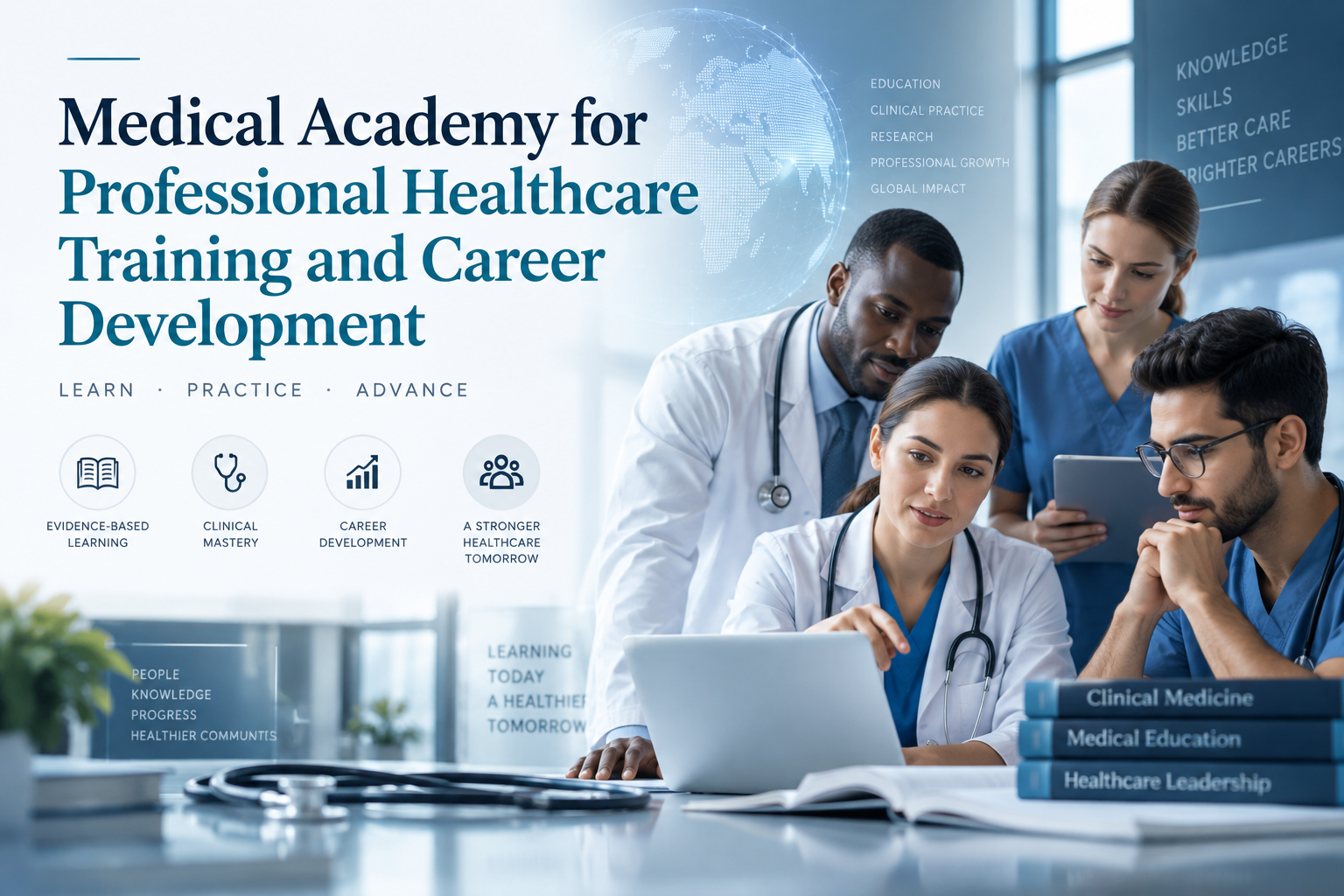
A Medical Academy is an educational and professional development environment designed to provide healthcare professionals with structured opportunities to improve their medical knowledge, clinical skills, and understanding of modern healthcare practices. Unlike traditional academic education, which often focuses heavily on theoretical knowledge, professional medical training can connect scientific concepts with practical applications that healthcare professionals encounter in their daily work. These institutions may offer lectures, workshops, clinical courses, seminars, simulation-based learning, certification programs, and other forms of continuing professional education. The exact structure differs depending on the institution, specialty, accreditation requirements, and educational objectives.
The main purpose of a Medical Academy is to support lifelong learning within the healthcare sector. Medicine is constantly developing, with new diagnostic technologies, treatment approaches, medical devices, research findings, and clinical guidelines appearing regularly. Healthcare professionals therefore need opportunities to update their knowledge after completing university or postgraduate education. Structured training can make this process more organized by allowing professionals to follow clearly defined educational pathways according to their specialties and career goals.
Training environments may cover a wide range of subjects, including internal medicine, surgery, emergency care, anesthesia, intensive care, radiology, cardiology, dentistry, nursing, pharmacy, laboratory medicine, and healthcare management. Some programs are introductory, while others are designed for experienced professionals seeking advanced knowledge or specialized skills. Educational activities may include theoretical presentations followed by practical demonstrations, case discussions, clinical simulations, assessments, and supervised practice where appropriate.
A modern institution may also use digital learning technologies to make professional education more accessible. Online lectures, recorded sessions, virtual classrooms, electronic learning platforms, and interactive educational materials can allow healthcare professionals to study while maintaining their clinical responsibilities. Blended programs can combine online theoretical education with practical sessions when hands-on training is necessary.
Another important characteristic is the emphasis on evidence-based practice. High-quality medical education should encourage participants to evaluate clinical information critically rather than rely solely on traditional habits or unverified sources. Courses may introduce current research, recognized clinical guidelines, professional standards, and methods for interpreting medical evidence.
Ultimately, the value of a medical training institution depends on the quality of its instructors, curriculum, practical opportunities, educational resources, assessment methods, and professional standards. A well-designed program can help healthcare professionals remain knowledgeable, confident, and prepared to provide safe and effective care in an increasingly complex healthcare environment.
The Role of a Medical Academy in Healthcare Professional Development
A Medical Academy can play an important role in healthcare professional development by providing structured education beyond initial university training. Healthcare careers require continuous learning because medical knowledge, technology, clinical guidelines, and patient-care expectations change over time. Professionals who regularly participate in educational activities can strengthen their existing knowledge while developing new competencies that support their clinical responsibilities and long-term career objectives. This type of development is particularly important for professionals working in specialized or rapidly evolving areas of healthcare.
One major role is continuing medical education. Doctors and other healthcare workers may use professional courses to review important concepts, understand new evidence, and improve their approach to diagnosis, treatment, patient communication, and clinical decision-making. Instead of depending entirely on independent study, participants can learn through organized curricula created around defined educational outcomes. This structure can make professional learning more focused and measurable.
Practical training is another important component. Some clinical skills are difficult to develop through textbooks alone. Simulation sessions, workshops, demonstrations, and supervised activities can provide opportunities to practice procedures in controlled environments. Depending on the program, participants may work with medical equipment, clinical scenarios, case-based exercises, or standardized patients. Practical education can help professionals understand not only what should be done but also how clinical knowledge can be applied appropriately.
Professional development also involves communication and teamwork. Healthcare delivery frequently requires collaboration among physicians, nurses, pharmacists, technicians, therapists, administrators, and other specialists. Educational programs can therefore address communication, leadership, teamwork, patient safety, ethics, and clinical coordination. These competencies can contribute to more effective healthcare delivery and a stronger professional culture.
Another valuable function is career development. Professionals may pursue additional qualifications or specialized training when preparing for a new clinical role, seeking advancement, or expanding their area of expertise. Carefully selected programs can help them identify knowledge gaps and create a more systematic professional development plan. However, participants should always verify whether a specific course provides recognized accreditation or fulfills the requirements of the relevant professional authority.
Technology has also expanded the role of professional education. Online platforms allow healthcare workers to access lectures, assessments, educational resources, and expert discussions without always needing to attend a physical classroom. This flexibility can be particularly useful for professionals with demanding schedules.
Overall, professional development should be viewed as an ongoing process rather than a single educational milestone. High-quality training can help healthcare professionals maintain competence, respond to changes in medicine, strengthen practical abilities, and pursue meaningful career progression while keeping patient safety at the center of their professional responsibilities.
Why Medical Training Is Important for Healthcare Professionals in Saudi Arabia
Medical training is particularly important for healthcare professionals in Saudi Arabia because the country’s healthcare sector continues to develop through advances in technology, specialized services, digital health, research, and healthcare infrastructure. Professionals working in this environment need to maintain current knowledge and adapt to changing clinical standards. A Medical Academy can contribute to this process by providing structured educational opportunities that support continuing professional development and help healthcare workers strengthen competencies relevant to modern clinical practice.
Saudi Arabia has a diverse healthcare workforce that includes physicians, nurses, pharmacists, dentists, laboratory professionals, allied health specialists, and healthcare administrators. Each group has different educational requirements and professional responsibilities. Effective training programs can therefore provide specialty-specific learning while also addressing broader topics such as patient safety, communication, ethics, infection prevention, emergency response, and quality improvement.
One of the most important benefits of continuing training is keeping clinical knowledge current. Medical recommendations can change as new research becomes available. Diagnostic methods may become more sophisticated, while new medications, medical devices, technologies, and treatment strategies can influence clinical practice. Healthcare professionals who participate in appropriate educational activities can review developments in their fields and consider how new evidence relates to their responsibilities.
Practical training is equally valuable. Clinical knowledge must often be combined with technical skills and sound decision-making. Workshops and simulation-based education can allow participants to practice procedures or respond to clinical scenarios in an organized learning environment. This can be particularly useful for emergency medicine, critical care, surgery, anesthesia, nursing procedures, and other fields in which technical competence and rapid decision-making are essential.
Training can also support healthcare quality and patient safety. Professionals who understand current safety protocols, communication methods, documentation practices, infection-control principles, and risk-management strategies can contribute to safer clinical environments. Education may also encourage multidisciplinary collaboration, which is increasingly important when patients require coordinated care from several healthcare professionals.
For professionals planning their careers in Saudi Arabia, training may also provide opportunities to develop specialized expertise. Before enrolling, however, individuals should examine course objectives, faculty qualifications, practical components, assessment methods, and accreditation status. Requirements can vary according to profession and specialty, so participants should confirm whether a particular program is recognized by the relevant Saudi professional or regulatory authority when recognition is important for their goals.
Ultimately, professional education is not simply about collecting certificates. Its greater purpose is to maintain competence, improve clinical reasoning, encourage evidence-based practice, and help healthcare professionals respond effectively to the evolving needs of patients and healthcare organizations in Saudi Arabia.
Who Can Join a Medical Academy?
A Medical Academy may welcome a broad range of healthcare professionals and learners, although eligibility depends on the institution, course type, specialty, and educational level. Medical students, physicians, nurses, pharmacists, dentists, laboratory professionals, physiotherapists, radiology professionals, emergency-care workers, and other allied healthcare specialists may find programs that match their educational backgrounds. Some courses are intended specifically for qualified professionals, while introductory programs may be suitable for students or individuals preparing to enter a healthcare-related field.
Medical students can benefit from supplementary education that complements their university curriculum. Workshops, clinical skills sessions, research courses, and professional development activities may help students develop practical knowledge beyond standard classroom instruction. Such opportunities can introduce them to clinical environments, communication skills, evidence-based practice, and professional expectations. However, students should distinguish between supplementary educational courses and formal qualifications that require recognized university or regulatory approval.
Qualified doctors often have a wide selection of continuing education opportunities. They may choose programs according to their specialty, current position, or future career objectives. For example, a physician may seek advanced training in emergency medicine, critical care, surgery, radiology, cardiology, pain management, medical leadership, or another specialized area. The appropriate course depends on the physician’s existing qualifications and the competencies they wish to develop.
Nurses and allied healthcare professionals can also benefit from targeted training. Their programs may focus on patient assessment, clinical procedures, infection prevention, emergency response, medication safety, communication, rehabilitation, or specialty-specific care. Pharmacists may seek education related to clinical pharmacy, medication management, pharmacotherapy, patient counseling, or healthcare systems. Dentists and dental professionals may similarly pursue courses that address new techniques, technologies, materials, and patient-care approaches.
Healthcare administrators and managers may also participate in professional education. Their development needs can include healthcare leadership, quality management, patient safety, health informatics, operational planning, and team management. These areas demonstrate that professional healthcare education is not limited to direct clinical treatment.
Before joining any program, applicants should carefully review admission requirements. These may include academic qualifications, professional registration, previous clinical experience, language proficiency, or completion of prerequisite courses. Some advanced programs may require participants to demonstrate specific competencies before enrollment.
Applicants should also consider whether the program offers a certificate, continuing professional development credits, practical training, or formal accreditation. Recognition can be particularly important for professionals who intend to use the course for licensing, career progression, or professional documentation. By selecting education that matches their current level and future objectives, participants can gain more meaningful benefits from their learning experience and make their professional development more purposeful.
Medical Academy Programs for Doctors
Programs designed for doctors can cover a wide range of clinical and professional subjects, allowing physicians to select education according to their specialty, experience, and career objectives. A Medical Academy may provide introductory, intermediate, or advanced courses, depending on the expected knowledge level and learning outcomes. The most valuable programs generally combine updated theoretical information with practical application, case-based learning, clinical reasoning, and opportunities for participants to evaluate their understanding through assessments or structured activities.
Clinical skills programs are particularly relevant for doctors who want to strengthen practical competencies. Depending on the specialty, these courses may cover procedures, patient assessment, diagnostic approaches, emergency management, ultrasound applications, surgical techniques, critical care practices, or other clinical skills. Simulation-based training can be especially useful because physicians can work through realistic scenarios in a controlled environment before applying relevant skills in clinical practice.
Specialty-focused education is another important category. Doctors may seek advanced courses in cardiology, anesthesia, emergency medicine, intensive care, radiology, surgery, obstetrics and gynecology, pediatrics, internal medicine, orthopedics, dermatology, pain medicine, or other disciplines. Specialty courses should ideally be developed around recognized clinical principles and current evidence, with qualified instructors who have appropriate expertise in the subject.
Programs may also address diagnostic and technological developments. Modern healthcare increasingly depends on digital systems, advanced imaging, minimally invasive procedures, clinical decision-support tools, and other technologies. Training can help physicians understand how these developments are used, their potential benefits and limitations, and the importance of applying them appropriately within clinical guidelines and professional standards.
Another area of interest is research and evidence-based medicine. Doctors who understand research methodology, clinical study design, medical literature evaluation, and basic data interpretation can make more informed decisions when reviewing new evidence. Courses in these subjects may also support physicians who intend to participate in research, publish academic work, or pursue postgraduate education.
Leadership and management programs can be valuable for doctors moving into senior clinical or administrative roles. These courses may address team leadership, communication, healthcare quality, patient safety, conflict management, strategic planning, and organizational improvement. Developing these skills can help physicians contribute effectively beyond their individual clinical responsibilities.
When selecting a program, doctors should examine the curriculum, faculty credentials, practical components, assessment methods, accreditation, and continuing professional development recognition. They should also ensure that the course is appropriate for their existing qualifications and professional scope of practice.
The strongest programs are those that connect education with real clinical needs. Rather than focusing solely on certificates, physicians should look for learning opportunities that improve knowledge, practical competence, clinical reasoning, communication, and patient-centered care. Continuous professional education can therefore become an important part of maintaining high standards throughout a doctor’s career.
Medical Academy Programs for Nurses
Nursing is a highly demanding healthcare profession that requires a combination of scientific knowledge, clinical competence, communication skills, and the ability to make appropriate decisions in different patient-care situations. Nursing education does not end after obtaining an academic qualification because healthcare practices, technologies, safety standards, and clinical recommendations continue to develop. Professional training programs can therefore help nurses maintain their competencies, strengthen existing skills, and develop additional expertise that supports their responsibilities in hospitals, clinics, emergency departments, rehabilitation centers, and other healthcare settings. A Medical Academy can provide structured educational opportunities that address these professional needs through theoretical lessons, practical workshops, simulations, and specialized continuing education courses.
Programs for nurses may begin with essential clinical skills and progress toward more specialized areas of practice. Basic courses can focus on patient assessment, vital-sign monitoring, medication administration, infection prevention, wound care, documentation, communication, and patient safety. These subjects form an important foundation for nurses because they are directly connected with everyday clinical responsibilities. More advanced programs may address intensive care nursing, emergency nursing, surgical nursing, pediatric care, maternal and newborn care, cardiac nursing, oncology nursing, dialysis, infection control, or other specialties.
Practical learning is particularly valuable for nurses because many professional responsibilities require accurate technical performance. Simulation-based education can allow participants to practice clinical scenarios in a controlled environment before applying relevant skills in real healthcare settings. Training may include emergency response exercises, patient assessment scenarios, clinical procedures, teamwork activities, and communication simulations. Such approaches can help learners understand how theoretical knowledge should be applied when caring for patients with different needs.
The essentials approach can also emphasize continuous professional development rather than treating training as a one-time activity. Nurses can identify areas where they need additional knowledge and select courses that correspond with their current position or future career plans. For example, a nurse working in an intensive care unit may benefit from critical-care education, while another professional working in an emergency department may prioritize trauma assessment, resuscitation, and emergency-response training.
Professional courses may also address non-clinical competencies. Effective communication, leadership, teamwork, conflict management, ethical practice, and patient education are increasingly important aspects of modern nursing. Nurses frequently work as part of multidisciplinary teams, making collaboration and clear communication essential to coordinated patient care.
When choosing a nursing program, participants should review the curriculum, instructors’ qualifications, practical training opportunities, assessment methods, certification, and accreditation status. They should also confirm whether the program meets the requirements of the relevant professional authority if continuing education credits or formal recognition are important. Selecting education based on genuine professional needs can help nurses develop practical competencies, remain current with healthcare practices, and contribute more effectively to safe, patient-centered care.
Medical Academy Programs for Dentists
Dentistry is a constantly developing healthcare field in which professionals need to keep their clinical knowledge and practical skills up to date. Advances in dental materials, diagnostic technologies, digital dentistry, restorative procedures, implantology, oral surgery, orthodontics, periodontics, and preventive care continue to influence modern dental practice. Professional education can help dentists understand these developments and determine how they may be incorporated into appropriate clinical settings. A Medical Academy can offer structured programs designed to support dentists at different stages of their careers, from recently qualified practitioners seeking to strengthen their foundational skills to experienced professionals interested in advanced or specialized training.
Dental education programs may cover a broad range of subjects depending on the learner’s professional interests. Restorative dentistry courses can focus on treatment planning, composite restorations, dental materials, aesthetic techniques, and approaches to preserving natural teeth. Other programs may address endodontics, periodontics, prosthodontics, oral surgery, pediatric dentistry, orthodontics, implant dentistry, or cosmetic procedures. Specialty-focused education allows practitioners to develop deeper knowledge in areas that are relevant to their clinical responsibilities or future career plans.
Hands-on learning is particularly valuable in dentistry because many procedures require technical precision and familiarity with specialized instruments and equipment. Workshops, demonstrations, simulation exercises, and supervised practical sessions can give participants opportunities to develop procedural skills in an organized educational environment. Digital technologies may also be incorporated into modern dental education, including digital impressions, computer-aided design and manufacturing, digital imaging, treatment-planning software, and other technologies used in contemporary dental practices.
Programs can also emphasize patient safety and professional standards. Dentists need to understand infection prevention, sterilization procedures, patient assessment, documentation, informed consent, and appropriate communication. Training in these areas can complement technical clinical education and contribute to a more comprehensive approach to dental care. Communication skills are particularly important because dentists often need to explain treatment options, expected outcomes, potential risks, and preventive recommendations clearly to patients.
Research and evidence-based dentistry may form another part of professional education. Dentists can benefit from learning how to evaluate scientific publications, understand clinical evidence, and distinguish established recommendations from unsupported claims. This can encourage more informed decision-making and help professionals keep their practice aligned with current knowledge.
Before enrolling, dentists should review the course content, instructor qualifications, practical components, assessment methods, certification, and accreditation. If continuing professional development credits are required, participants should confirm whether the specific program is recognized by the relevant authority. Choosing training that matches individual professional goals can help dentists strengthen their expertise, improve clinical confidence, and continue developing throughout their careers.
Medical Academy Programs for Pharmacists
Pharmacy is an essential part of modern healthcare, and pharmacists increasingly contribute to patient care beyond the traditional responsibilities of dispensing medicines. Changes in pharmacotherapy, clinical guidelines, medication technologies, drug safety practices, and healthcare systems require pharmacists to continue developing their knowledge throughout their careers. A Medical Academy can support this professional development by offering structured educational programs that address current pharmaceutical knowledge, clinical applications, communication, and medication-management skills.
Programs for pharmacists can be designed according to different career paths and levels of experience. Foundational courses may review pharmacology, medication safety, drug interactions, dosage considerations, patient counseling, and appropriate medicine use. More advanced education can focus on clinical pharmacy, hospital pharmacy, pharmacotherapy, oncology pharmacy, infectious diseases, cardiovascular medicine, diabetes management, or other therapeutic areas. By selecting courses related to their responsibilities, pharmacists can focus their professional development on areas where additional knowledge may be particularly useful.
Medication safety is an important subject within pharmaceutical education. Pharmacists need to understand potential medication errors, drug interactions, contraindications, adverse reactions, and appropriate monitoring requirements. Training may use case-based learning to demonstrate how pharmacists can identify potential problems and communicate relevant concerns to other members of the healthcare team. This type of education can reinforce the pharmacist’s role in supporting safe and appropriate medication use.
Patient communication is another important area. Pharmacists regularly interact with patients who may have questions about dosage instructions, possible side effects, medication schedules, or the importance of adherence. Professional courses can help pharmacists develop effective communication techniques that make complex medical information easier for patients to understand. Training can also address communication with physicians, nurses, and other healthcare professionals to encourage coordinated care.
Technology has become increasingly relevant to pharmacy practice. Electronic prescribing, digital medication records, clinical decision-support systems, automated dispensing technologies, and other healthcare technologies can influence how medicines are managed. Educational programs may introduce pharmacists to these developments while emphasizing appropriate professional judgment and patient safety.
Research and evidence-based practice can also strengthen pharmaceutical careers. Courses in clinical research, literature evaluation, pharmacoeconomics, data interpretation, and evidence-based medicine may help pharmacists assess new information more effectively. This knowledge can be useful for professionals working in hospitals, community pharmacies, pharmaceutical companies, research institutions, and academic environments.
Pharmacists considering additional education should evaluate the curriculum, faculty experience, practical elements, assessments, certification, and accreditation of each program. They should also determine whether the course is relevant to their professional scope and whether any continuing professional development recognition applies. The most useful training is education that addresses real workplace requirements rather than simply providing a certificate. Through focused and continuous learning, pharmacists can maintain current knowledge, strengthen medication-management competencies, communicate more effectively with patients and healthcare teams, and contribute to safe, evidence-informed healthcare.
Medical Academy Programs for Allied Health Professionals
Allied health professionals represent a broad group of healthcare workers who contribute significantly to diagnosis, treatment, rehabilitation, prevention, and patient support. This group may include physiotherapists, occupational therapists, radiographers, medical laboratory professionals, respiratory therapists, dietitians, speech and language therapists, and other specialized practitioners. Because each profession has distinct responsibilities, professional education needs to be flexible enough to address specific clinical competencies while also promoting teamwork, communication, patient safety, and evidence-based practice. A Medical Academy can provide training opportunities that support these varied professional needs.
Programs for allied health professionals may focus on both general competencies and specialized clinical skills. Physiotherapists, for example, may seek education in musculoskeletal rehabilitation, sports injuries, neurological rehabilitation, exercise therapy, or patient assessment. Occupational therapists may pursue courses related to functional rehabilitation, neurological conditions, pediatric therapy, or assistive technologies. Radiography professionals may benefit from training related to imaging techniques, radiation safety, equipment developments, and image quality. Laboratory professionals may pursue education in diagnostic testing, laboratory quality management, molecular techniques, or clinical laboratory technologies.
Hands-on education can be especially useful for allied health practitioners because many roles require practical procedures and technical expertise. Workshops, demonstrations, simulation-based learning, and supervised activities can provide opportunities to practice relevant skills in controlled environments. Practical training should be appropriately matched to the participant’s professional qualifications and scope of practice. It should complement, rather than replace, the formal education and professional requirements established for each healthcare discipline.
Patient safety is another important component of professional development. Allied health professionals frequently work directly with patients and may encounter situations involving infection prevention, medication information, mobility risks, equipment use, emergency response, or communication challenges. Courses that address safety protocols and risk awareness can support safer clinical environments. Education in documentation and professional communication can also help ensure that important patient information is communicated accurately between members of a multidisciplinary team.
Technology is changing many allied health professions. Digital imaging, electronic health records, laboratory automation, rehabilitation technologies, remote healthcare services, and specialized diagnostic equipment can influence daily professional responsibilities. Continuing education can help practitioners understand these developments and consider how they may be incorporated into appropriate clinical workflows.
Professional development may also include leadership, research, quality improvement, and healthcare management. Experienced allied health professionals may eventually take supervisory or managerial positions, making leadership and organizational skills increasingly relevant. Research education can help practitioners evaluate scientific evidence and apply reliable information to their professional decisions.
Before selecting a program, allied health professionals should consider the course objectives, professional level, practical training, instructor qualifications, assessment process, certification, and accreditation. Recognition by the relevant professional authority may also be important, particularly when education is being completed for continuing professional development. By choosing training that corresponds with their discipline and career objectives, allied health professionals can maintain their competencies, adapt to developments in healthcare, and contribute more effectively to coordinated, patient-centered care.
Medical Academy Programs for Healthcare Technicians
Healthcare technicians play an essential role in supporting physicians, nurses, pharmacists, dentists, and other healthcare professionals across hospitals, clinics, diagnostic centers, laboratories, and specialized medical facilities. Their responsibilities often involve operating medical equipment, preparing patients for procedures, collecting and processing samples, maintaining accurate records, and ensuring that clinical environments follow established safety and quality standards. Because healthcare technology continues to develop, technicians need practical education that combines theoretical knowledge with hands-on skills relevant to their specific area of practice. A well-structured educational program can help healthcare technicians strengthen their professional abilities, understand modern procedures, and approach their daily responsibilities with greater confidence.
At Essentials Medical Academy, educational programs for healthcare technicians can be designed around the practical demands of different technical healthcare roles. Depending on the learner’s professional background and career objectives, training may cover subjects such as medical terminology, infection prevention and control, patient safety, clinical procedures, equipment handling, documentation, healthcare communication, and basic principles of anatomy and physiology. These areas provide technicians with a stronger understanding of how their technical responsibilities fit into the wider healthcare environment. Rather than focusing exclusively on theoretical concepts, effective training should connect academic information with situations that technicians may encounter in real clinical settings.
Another important aspect of professional development is familiarity with healthcare equipment and technology. Technicians may work with diagnostic devices, laboratory instruments, monitoring systems, imaging technologies, or other specialized equipment depending on their profession. Training can help learners understand the purpose of different technologies, appropriate operating procedures, routine safety precautions, and the importance of following manufacturer and institutional guidelines. Developing these skills can contribute to more consistent performance while supporting patient safety and efficient teamwork.
Communication is also an important component of technician education. Although technicians may have highly specialized responsibilities, they frequently interact with patients and collaborate with doctors, nurses, administrators, and other healthcare workers. Programs can therefore include communication skills, professional conduct, patient privacy, teamwork, and appropriate documentation practices. These competencies help technicians contribute effectively to multidisciplinary healthcare teams.
Continuous education is particularly valuable for healthcare technicians because procedures, technologies, regulations, and professional expectations can change over time. Short courses, certification preparation, workshops, and advanced training can provide opportunities to update existing knowledge and develop additional competencies. By choosing education that matches their current role and future goals, healthcare technicians can build a stronger professional foundation and remain prepared for the changing demands of modern healthcare.
Medical Academy Programs for Healthcare Administrators and Managers
Healthcare administrators and managers have an important responsibility in ensuring that medical organizations operate efficiently while maintaining high standards of patient care, staff coordination, compliance, and service quality. Unlike clinical professionals whose primary responsibilities focus on diagnosis and treatment, healthcare administrators work behind the scenes to coordinate people, resources, systems, finances, policies, and operational processes. As healthcare organizations become increasingly complex, professionals in administrative and managerial positions need a combination of healthcare knowledge, leadership abilities, organizational skills, and an understanding of modern healthcare management practices. Professional education can provide administrators and managers with the knowledge required to handle these responsibilities more effectively.
Medical Academy programs designed for healthcare administrators and managers may cover a wide range of subjects related to healthcare leadership and administration. Depending on the learner’s career level and professional objectives, courses can address healthcare management principles, hospital administration, strategic planning, healthcare quality management, patient safety, human resources, financial management, healthcare operations, risk management, and regulatory compliance. Studying these areas allows professionals to understand how different departments within a healthcare organization interact and how administrative decisions can influence operational performance and patient experience.
Leadership development is another important component of healthcare management education. Managers frequently supervise multidisciplinary teams that include physicians, nurses, technicians, administrative employees, and support staff. Effective leadership requires more than assigning tasks. Managers need to communicate clearly, resolve workplace challenges, delegate responsibilities, evaluate performance, and create an environment that encourages teamwork and professional development. Training can introduce practical leadership approaches that help participants become more confident when managing teams and responding to organizational challenges.
Healthcare administrators also need to understand the importance of quality improvement and patient safety. Professional courses may explore methods for identifying operational problems, monitoring performance indicators, developing improvement plans, and implementing procedures that support safer and more consistent healthcare services. Participants can also learn about documentation, confidentiality, ethical considerations, and compliance requirements relevant to healthcare organizations.
For professionals seeking career advancement, continuing education can strengthen existing qualifications while demonstrating a commitment to professional development. Programs may be suitable for hospital administrators, department supervisors, clinic managers, healthcare coordinators, and professionals preparing for managerial responsibilities. Learners can select training according to their current position and long-term goals. For additional information about available programs, schedules, and enrollment options, healthcare professionals can contact the academy directly at +966 58 044 3214 and discuss the most appropriate educational pathway for their needs.
Types of Professional Medical Courses Available at a Medical Academy
Professional medical courses cover a broad range of educational pathways designed to strengthen the knowledge, practical skills, and professional competencies of healthcare workers at different stages of their careers. A Medical Academy may provide specialized courses for physicians, dentists, pharmacists, nurses, laboratory professionals, radiology technicians, healthcare administrators, and other allied health professionals. These courses can range from short-term skills-based training to structured programs that require several months of study. The main advantage of professional courses is their ability to address specific learning needs without requiring participants to commit to a full academic degree. Healthcare professionals can select programs according to their current qualifications, professional responsibilities, and future career goals. Clinical courses may focus on patient assessment, diagnostic techniques, emergency care, infection prevention, clinical procedures, or specialized areas of medicine. Other programs may emphasize healthcare management, medical documentation, patient safety, quality improvement, or healthcare technology. Practical learning is particularly valuable because medical professionals need to apply theoretical knowledge accurately in real clinical environments.
Depending on the subject, courses may include lectures, interactive discussions, case studies, demonstrations, simulations, assessments, and supervised practical activities. Some programs are designed for beginners who want to establish foundational knowledge, while others are intended for experienced professionals seeking advanced competencies. Continuing professional education can also help healthcare workers stay familiar with updated clinical practices, technologies, guidelines, and professional standards. When selecting a course, learners should consider the curriculum, duration, learning format, faculty qualifications, assessment methods, and whether the program provides a recognized certificate.
It is also important to determine whether the course meets any continuing education or professional licensing requirements applicable to the learner’s profession and jurisdiction. Online and blended courses can provide additional flexibility for working professionals, allowing them to study while maintaining their employment responsibilities. However, programs involving hands-on clinical skills may require practical sessions in an appropriate training environment. A well-designed course should balance theoretical instruction with opportunities to develop applicable professional skills. Ultimately, the most suitable course depends on the learner’s specialty, experience, career objectives, and the competencies they want to develop.
By choosing targeted professional education, healthcare workers can build knowledge systematically, improve confidence in appropriate professional tasks, and support ongoing career development while maintaining a commitment to safe, evidence-informed healthcare practice.
Medical Diploma Programs for Healthcare Professionals
Medical diploma programs offer a more structured educational pathway for healthcare professionals who want deeper knowledge and broader competencies in a particular clinical, technical, administrative, or healthcare-related field. A Medical Academy may organize diploma programs around specialized disciplines that allow learners to study a defined subject over an extended period rather than completing a short standalone course. These programs can be suitable for professionals who want to expand their existing qualifications, prepare for additional responsibilities, or develop expertise in an area related to their current career. Depending on the institution and specialty, diploma curricula may include theoretical modules, practical training, clinical case discussions, research assignments, examinations, and competency-based assessments.
Programs for healthcare professionals can address areas such as clinical practice, healthcare management, medical education, laboratory sciences, infection control, patient safety, quality management, healthcare technology, or other specialized fields. The appropriate program depends on the learner’s existing education and the admission requirements established by the institution. Some diplomas may be designed specifically for licensed healthcare professionals, while others may accept candidates with related academic backgrounds. Before enrollment, applicants should review the curriculum carefully to understand the subjects covered, expected workload, duration, assessment structure, and practical requirements. Accreditation and recognition are also important considerations because the value of a diploma can depend on the institution awarding it and the professional regulations in the country where the qualification will be used. Diploma programs can provide a systematic learning experience by connecting foundational concepts with advanced applications. Rather than focusing on one isolated skill, learners generally study several related topics that contribute to a broader understanding of their chosen field. This structure can be particularly useful for professionals who need to understand how clinical, operational, managerial, and quality considerations interact within modern healthcare environments. Depending on the delivery model, classes may be offered on campus, online, or through blended learning.
Online study can make continuing education more accessible to professionals with demanding schedules, although practical components may still require attendance at designated facilities. A strong diploma program should be delivered by appropriately qualified instructors and should use clear learning objectives and meaningful assessments. Participants should also have access to educational resources that support independent study and professional development. Completing a diploma does not automatically replace a professional license or specialist qualification unless the relevant regulatory authority explicitly recognizes it for that purpose. Therefore, healthcare professionals should verify recognition requirements before enrolling. With appropriate selection, a diploma can become a valuable part of lifelong learning and provide a structured foundation for advancing knowledge, developing professional competencies, and preparing for new responsibilities within healthcare.
Professional Medical Certification Programs
Professional medical certification programs are designed to validate specific knowledge, skills, or competencies within a defined area of healthcare practice. A Medical Academy may offer certification-focused education for healthcare professionals who want to demonstrate additional training in a specialized subject or strengthen their professional portfolio. Unlike broad academic degrees, certification programs usually concentrate on clearly defined competencies and may be shorter and more targeted than diploma-level education. The subjects available can vary widely and may include clinical skills, emergency response, patient safety, infection prevention, healthcare quality, medical coding, healthcare administration, laboratory procedures, technology applications, or other professional areas. The structure of a certification program commonly includes educational modules followed by an examination, practical assessment, or another method of demonstrating competency. Some certifications are issued directly by the educational provider, while others may involve an independent professional or certifying organization.
Because recognition differs between programs, learners should investigate who awards the certification, what standards it follows, whether an examination is required, and how long the credential remains valid. In some professions, certification may require periodic renewal, continuing education, or evidence of ongoing professional practice. Healthcare professionals should also distinguish between a training certificate showing course completion and a professional certification that formally assesses competency against defined standards. This distinction is important when evaluating the credential’s relevance to employment, licensing, promotion, or continuing professional development. Certification programs can be useful for professionals who want to focus on a particular competency without undertaking a lengthy academic program. They may also support career development by helping learners document additional education in areas relevant to their responsibilities. However, certification should complement, rather than replace, the foundational education and licensing requirements applicable to a healthcare profession.
The quality of a certification program depends on factors such as curriculum design, instructor expertise, assessment reliability, practical relevance, and the transparency of certification requirements. Learners should look for programs with clearly stated objectives and assessment criteria rather than choosing solely on the basis of a certificate title. Flexible delivery options, including online and blended learning, can make certification education more convenient for working professionals, although hands-on subjects may require practical attendance. It is equally important to confirm whether the certification is recognized by employers, professional bodies, or regulatory authorities in the intended location of practice.
By selecting a certification aligned with their professional role and career objectives, healthcare workers can pursue focused learning, document specialized competencies, and maintain a commitment to continuing professional development. The right program should provide meaningful education and assessment rather than simply offering a credential, ensuring that the knowledge gained can be applied responsibly within the learner’s professional scope of practice.
Continuing Medical Education Courses for Healthcare Professionals
Continuing medical education courses provide healthcare professionals with opportunities to update their knowledge, strengthen practical competencies, and remain familiar with developments in modern healthcare. Essentials Medical Academy can support this type of professional development through educational programs designed around the changing needs of physicians, nurses, pharmacists, laboratory specialists, healthcare administrators, and other members of the healthcare workforce. Unlike initial professional education, continuing education focuses on maintaining and expanding knowledge after a professional has already entered the healthcare field.
Medical science develops continuously, with new diagnostic approaches, treatment techniques, technologies, safety recommendations, and evidence-based practices emerging over time. Regular education can therefore help professionals remain informed and better prepared to perform responsibilities within their established scope of practice. Continuing medical education may cover subjects such as clinical assessment, emergency medicine, patient safety, infection prevention, chronic disease management, diagnostic procedures, healthcare quality, medical technology, and professional communication. The appropriate topics depend on the learner’s specialty, experience, workplace responsibilities, and professional development objectives. Courses can be delivered through classroom teaching, online sessions, workshops, seminars, simulations, case-based discussions, or blended formats that combine several approaches. Interactive learning can be particularly useful because healthcare professionals can examine clinical scenarios, discuss appropriate approaches, and connect theoretical concepts with situations encountered in practice. Some programs may also include assessments that allow participants to evaluate their understanding and identify areas requiring further study. When choosing a continuing education course, professionals should examine the learning objectives, curriculum, instructor qualifications, duration, assessment process, and certification details. It is also advisable to determine whether the course is recognized for continuing professional development or licensing purposes by the relevant authority in the professional’s location.
A course completion certificate and a formally recognized professional credential are not necessarily the same, so learners should understand exactly what the provider offers. Flexible scheduling can make continuing education easier for professionals who work full-time or have demanding clinical responsibilities. However, courses involving practical competencies should provide suitable opportunities for hands-on learning and objective assessment where appropriate. Continuing education should ultimately be viewed as an ongoing professional responsibility rather than a one-time achievement. By participating in relevant educational programs, healthcare professionals can systematically refresh existing knowledge, explore developments within their specialties, and support a culture of safe, effective, and evidence-informed healthcare practice.
